Da Vinci robotic surgery represents the most advanced level of minimally invasive surgery available today. In gynecology, this technology has transformed the treatment of complex conditions — from deep endometriosis to large fibroids and early-stage gynecologic cancer.

What is the Da Vinci system?
The Da Vinci surgical system is a robotic platform operated by the surgeon — it is not an autonomous robot. The surgeon sits at a console and controls, in real time, four robotic arms that carry out the movements with high precision.
System components
- Surgeon console — the surgeon sits comfortably with 3D visualization and ergonomic controls
- Patient cart — four robotic arms holding miniaturized instruments
- Vision tower — high-definition video processing
- EndoWrist instruments — with 7 degrees of freedom (more than the human hand)
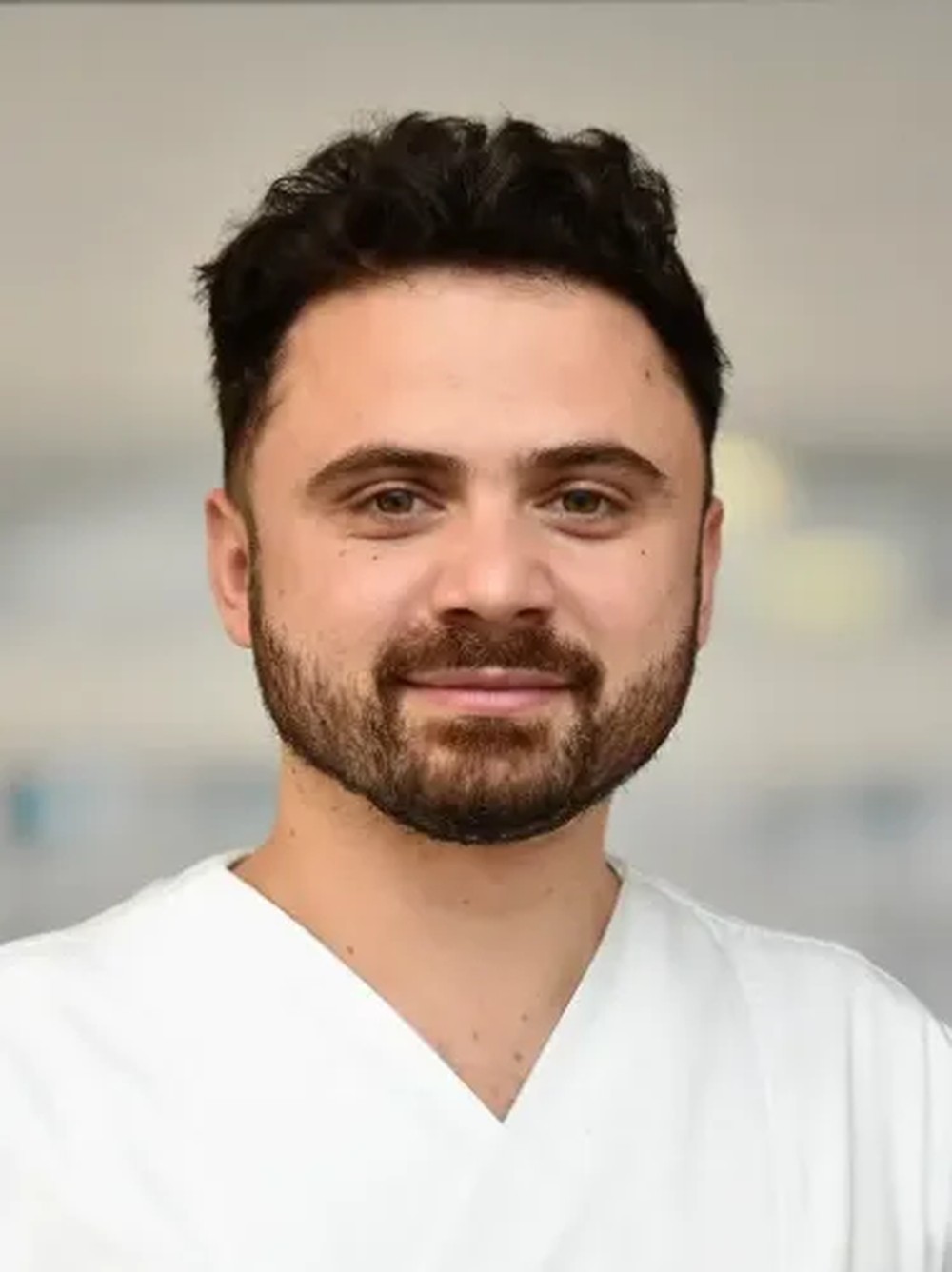
— Dr. Alin Constantin, Robotic Proctor, Intuitive Surgical
Advantages of robotic surgery vs. classical laparoscopy
1. Millimeter-level precision
Da Vinci instruments have 7 degrees of freedom — more than the human wrist. This allows:
- Delicate dissection in narrow anatomical spaces
- Precise suturing in hard-to-reach areas
- Fine tissue handling
- Reduced trauma to adjacent structures
2. 3D visualization with 10x magnification
The system has two cameras that provide high-definition three-dimensional imaging, magnified 10 times. The surgeon sees:
- Anatomical structures in real relief, with depth
- Fine blood vessels that would not be visible in 2D
- Dissection planes with clarity
- Millimeter-level detail
3. Elimination of hand tremor
Even the most experienced surgeons have a subtle natural hand tremor. The Da Vinci system automatically filters this tremor, enabling perfectly controlled movements even during long procedures (2–4 hours).
4. Minimal incisions
- 3–4 incisions of 5–8 mm (Da Vinci) vs. a large 15–20 cm incision (open surgery)
- Nearly invisible scars
- Minimal tissue trauma
- Superior cosmetic recovery
5. Faster recovery
- Robotic surgery: 1–2 days in hospital, normal activity in 2–3 weeks
- Classical laparoscopy: 2–3 days in hospital, normal activity in 3–4 weeks
- Open surgery: 5–7 days in hospital, normal activity in 6–8 weeks
When is robotic surgery indicated in gynecology?
1. Deep infiltrating endometriosis (DIE)
This is the gold indication for robotic surgery. When endometriosis involves:
- Rectum and sigmoid (bowel endometriosis)
- Bladder
- Ureters
- Pelvic nerves
- Uterosacral ligaments
Da Vinci precision allows complete excision of lesions with preservation of adjacent structures — including the nerves that control the bladder and rectum.
2. Complex myomectomy
Multiple or deep intramural fibroids benefit significantly from robotic surgery:
- Uterine preservation — essential for women planning pregnancy
- Multi-layer suturing of the uterine wall — reduces the risk of uterine rupture in pregnancy
- Minimal bleeding
3. Oncologic hysterectomy
For early-stage endometrial or cervical cancer, robotic surgery offers:
- The oncologic gold standard (results comparable to open surgery)
- Precise pelvic and para-aortic lymphadenectomy
- Much faster recovery
- Lower risk of complications
4. Pelvic reconstructive surgery
For genital prolapse or urinary incontinence, robotic sacrocolpopexy offers superior long-term results.
How does a robotic procedure work?
Preoperative preparation
- Consultation and complete evaluation
- Standard preoperative investigations
- Fasting for 8 hours before surgery
- Bowel preparation (for bowel surgery)
On the day of surgery
- Admission on the day of the procedure
- General anesthesia
- Patient positioning and sterile draping
- Creation of 3–4 incisions of 8 mm for trocar placement
- Connection of robotic arms to the trocars
- The surgeon sits at the console and begins the procedure
- Duration: 2–5 hours depending on complexity
Postoperative course
- Awakening in the recovery room (30–60 min)
- Mobilization 4–6 hours after the procedure
- Oral intake starting on day one
- Discharge in 1–2 days
- Oral analgesics as needed
- Return to light activity in 5–7 days
Who performs robotic surgery?
Robotic surgery requires specific certified training. Dr. Alin Constantin is:
- Robotic Proctor certified by Intuitive Surgical (the manufacturer of Da Vinci)
- 9 years of training in Germany — Frankfurt, Hamburg, Saarland University Medical Center
- Vice President, European Endometriosis League
- Faculty, IRCAD Strasbourg — training surgeons worldwide
- PubMed publications on robotic surgery (Arch Gynecol Obstet 2025)
Book an evaluation to find out whether robotic surgery is the right option for your case.
📅 Book Pre-Consultation →Related articles
- What is endometriosis — Complete 2026 guide
- Transvaginal ultrasound in the diagnosis of endometriosis
- Robotic surgery service — complete details
Last updated: July 2026 • Author: Dr. Alin Constantin, Robotic Proctor, Intuitive Surgical