Endometriosis exists. In Africa too. And it is far more common than most people assume.
During the EndoScanAfrica ultrasound workshop held in Nairobi, we performed detailed transvaginal ultrasound assessments on 34 women with symptoms suggestive of endometriosis. The findings were striking.
Study findings — at a glance
- 88% had sonographic features of adenomyosis
- 50% — non-bowel deep infiltrating endometriosis
- 23.5% — bowel deep infiltrating endometriosis
- 26.5% — ovarian endometrioma
- 20.6% — obliteration of the pouch of Douglas
- In women with a history of gynecologic surgery, the prevalence of bowel DIE was 23.8 times higher (Menakaya et al., 2025 — an association suggesting recurrence or residual disease)
The figures that follow are from Menakaya et al., 2025 (Int J Gynecol Obstet, cohort N=250 women in Nairobi, IDEA Protocol).
What these numbers mean
These findings confirm what women in Africa have been saying for years: their pain is real, severe, and far too often ignored. Limited access to specialized imaging is a major contributor to diagnostic delays — with profound consequences for quality of life, fertility, and psychological well-being.
The study, now published in the International Journal of Gynecology & Obstetrics, represents the first ultrasound-based assessment of women with clinically suspected endometriosis in Sub-Saharan Africa.
The findings confirm what women in Africa have been saying for years: their pain is real. This study is the first of its kind in Sub-Saharan Africa — but it should not be the last.
Full reference: Menakaya U.A., Agholor K.N., El Haieg D., Patel Y., Malele K., Njagi J., Constantin A.S. (2025). Endometriosis in African women: Findings from a cohort of reproductive-age women attending an endometriosis ultrasound training program. International Journal of Gynecology & Obstetrics. DOI: 10.1002/ijgo.70606
📄 DOI: 10.1002/ijgo.70606
Original video: @dr.alinconstantin on TikTok
Why this matters
For a long time, the medical literature on endometriosis has been dominated by data from Europe, North America, and developed Asia. Sub-Saharan Africa has remained invisible — not because the disease does not exist there, but because the infrastructure for diagnosis (IDEA ultrasound, dedicated MRI, robotic surgery) is limited.
The result: millions of African women with severe, untreated endometriosis whose symptoms are attributed to "stress," "intolerances," or being "psychosomatic." The same narratives we hear in Romania — only amplified.
What we did in Nairobi
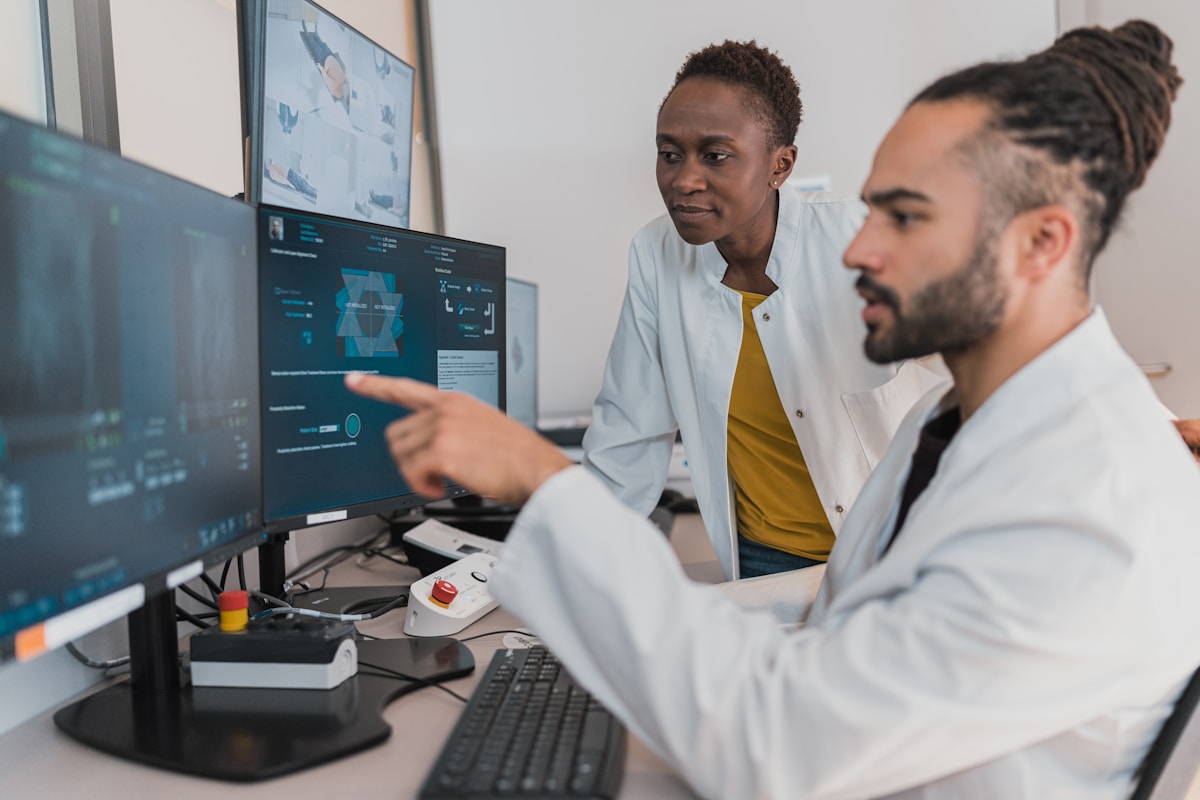
- 34 women with suggestive symptoms were evaluated with standardized transvaginal ultrasound (IDEA Protocol — International Deep Endometriosis Analysis)
- Each patient received a complete assessment — not just a routine, non-specialized "gynecologic ultrasound"
- An internationally standardized protocol, applied consistently to every patient in the cohort
- The data were documented and published — to build an evidence base for the African continent
The signal for patients in Romania
What does a study from Nairobi mean for a woman seeking a diagnosis in Bucharest? Three lessons.
First: if 88% of women tested in Kenya with symptoms have adenomyosis, the percentage is likely similar anywhere. The symptoms are not "normal." They should not be ignored for years.
Second: a routine gynecologic ultrasound, without the IDEA protocol applied by a trained examiner, misses most deep endometriosis lesions. The IDEA protocol (International Deep Endometriosis Analysis), used in this study, is different — and it is available in Romania from trained examiners.
Third: surgical history matters. In women with prior gynecologic surgery, the prevalence of bowel deep infiltrating endometriosis was 23.8 times higher (Menakaya et al., 2025) — a sign of residual disease after incomplete excision or of postoperative recurrence, not that the surgery itself causes endometriosis. Reassessment with the IDEA protocol after any gynecologic surgery is critical.
Acknowledgments
Heartfelt thanks to the EndoScanAfrica team, the local organizing team, the international experts in ultrasound and surgery, GE Healthcare, 3rd Park Hospital, PASE, and all the partners who believed in this mission.
But above all, my thanks go to the women who took part — for their courage and trust. Their stories and their strength are the driving force behind this work.
This is only the beginning.
📌 Key takeaways for the patient
Endometriosis affects 1 in 10 women — globally, on every continent.
Early diagnosis depends on the examiner's expertise in consistently applying the IDEA Protocol — not just on the equipment.
If your symptoms (pelvic pain, debilitating periods, dyspareunia, infertility) have not been investigated with the IDEA Protocol — you deserve a second opinion.